Users of The Zebra currently lack a clear and consistent way to return to their personalized product experience. Our current solution is both inconsistently presented and difficult to access. We aim to solve this by creating a simple, reliable way for users to easily return to their personalized experience.
RESEARCH
Business Problem
Our data doesn’t yet show a clear picture of long-term user engagement on The Zebra, but there’s strong potential in features that drive frequent, sustained use. Repeat visits lead to higher LTV, increased revenue, and reduced reliance on Marketing for re-engagement.
As we make the product stickier and route more of the insurance journey through The Zebra, we gain market leverage and unlock larger opportunities. To do this, users need compelling reasons to return—like personalized recommendations, helpful tools, and a seamless re-engagement loop.
RESEARCH
Project kickoff & initial research
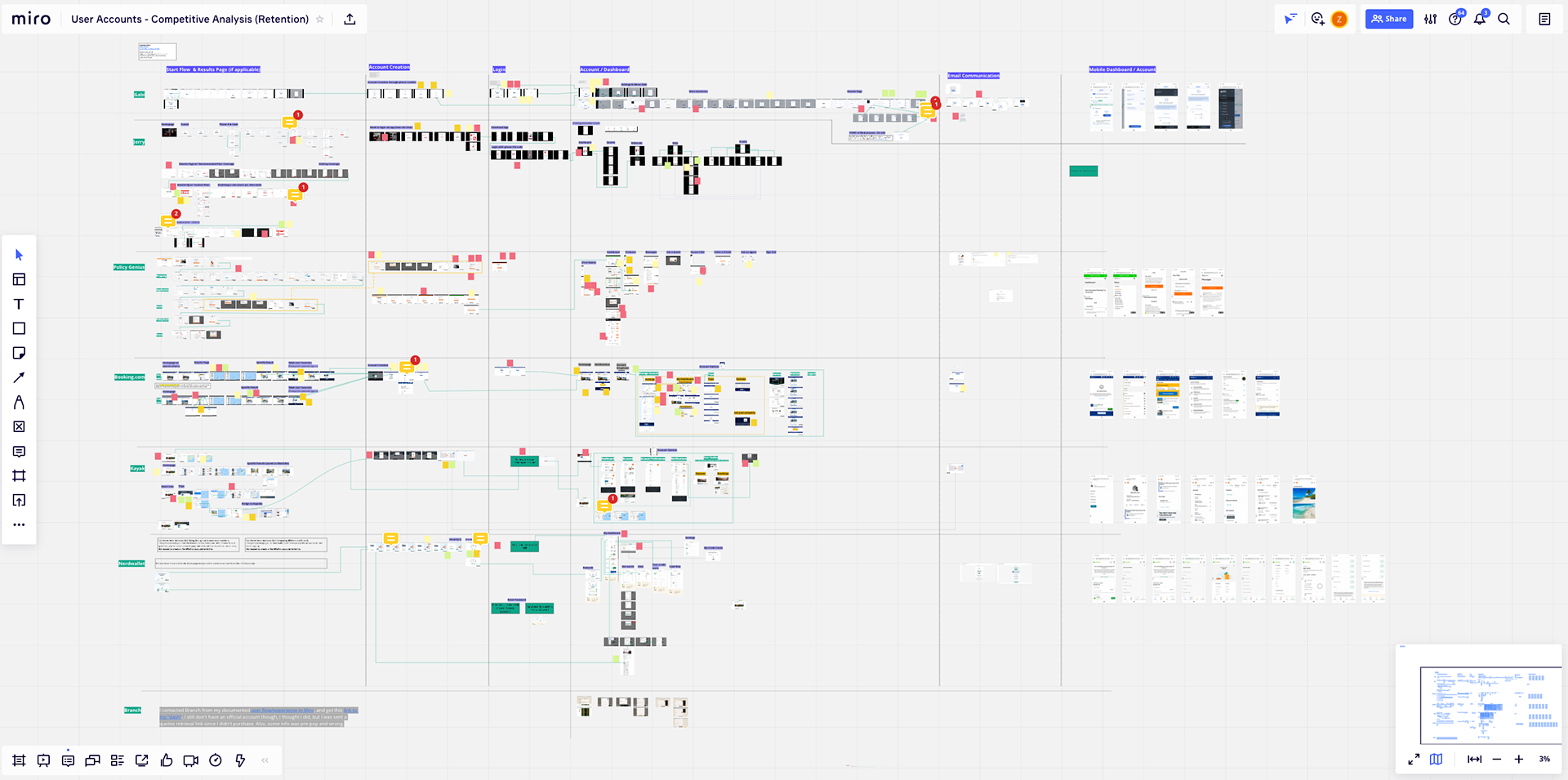
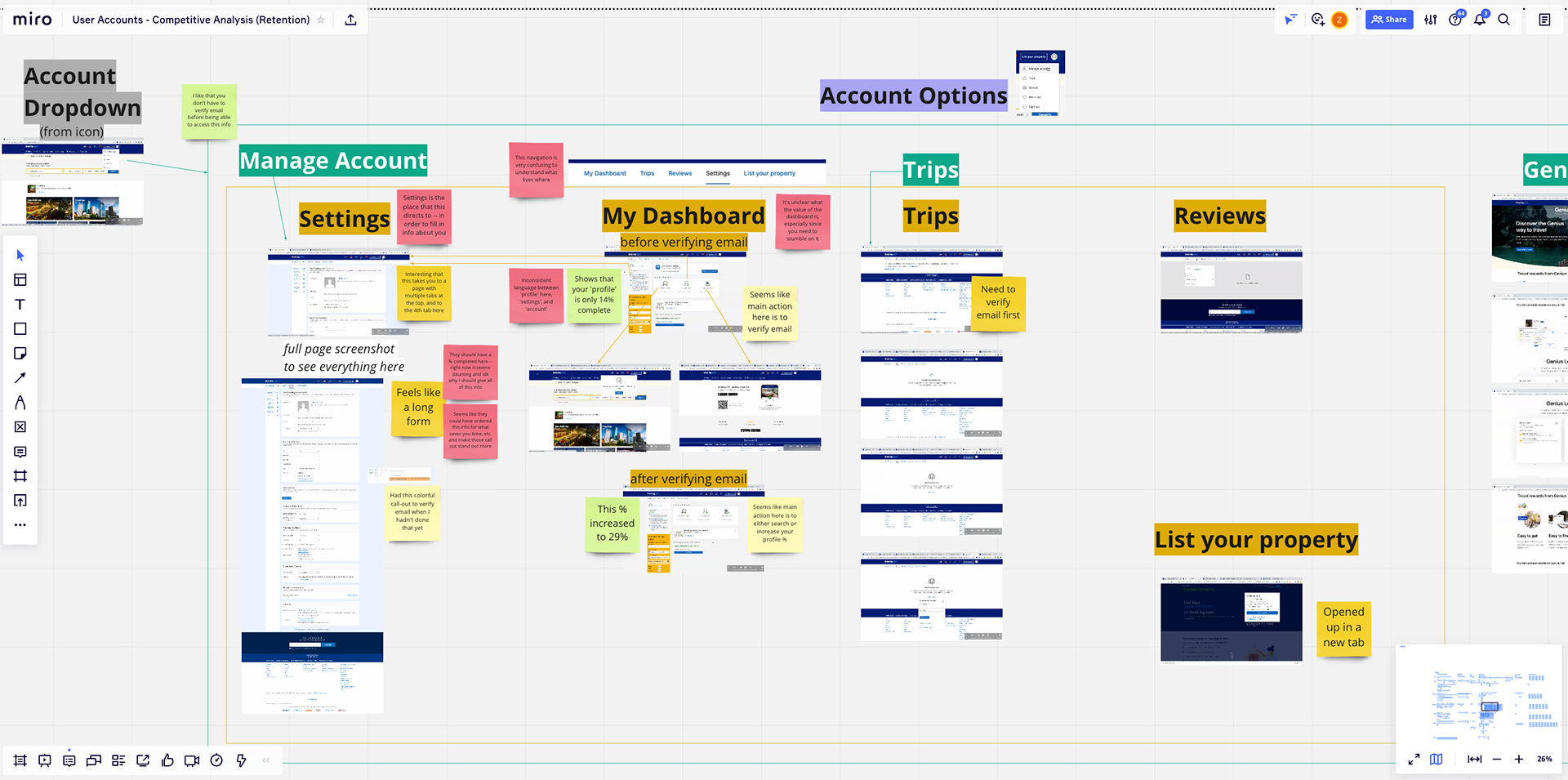
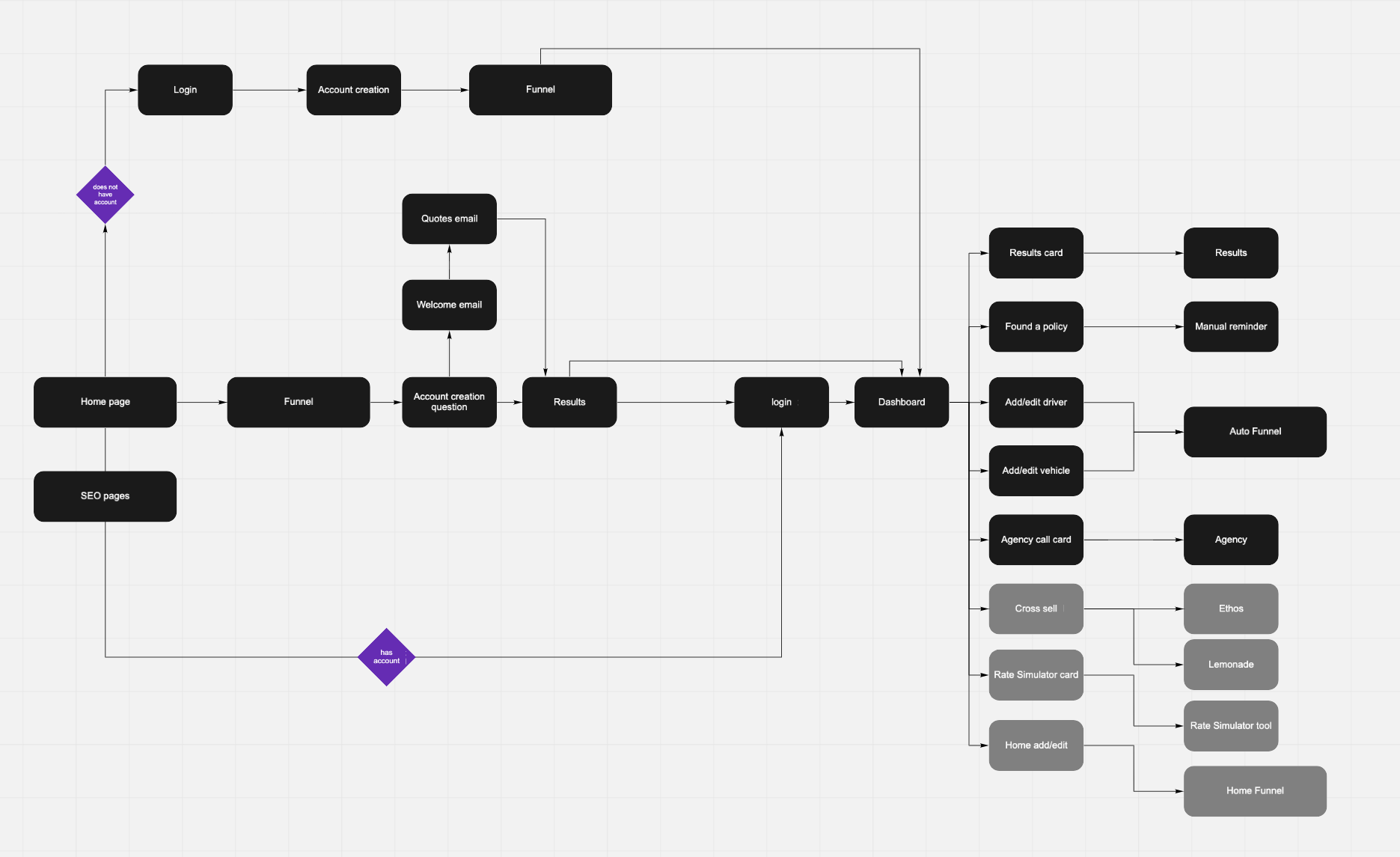
Collaborating with a large cross-functional team, we began by identifying existing data, user stories, and key research opportunities. Partnering closely with a UX researcher, we conducted a comprehensive competitive analysis to uncover common patterns and best practices in dashboard UX. From there, we developed an aspirational user flow, mapping prioritized solution hypotheses along the way. This artifact became a valuable alignment tool—visualizing our product roadmap and bringing product, design, research, and engineering into strategic sync.
DESIGN
Hi-fidelity concepts
The design phase began with an aspirational user flow, with prioritized solution hypotheses plotted throughout. This deliverable helped visualize our roadmap and aligned product, design, research, and engineering.
RESEARCH
User Flow & Wireframes
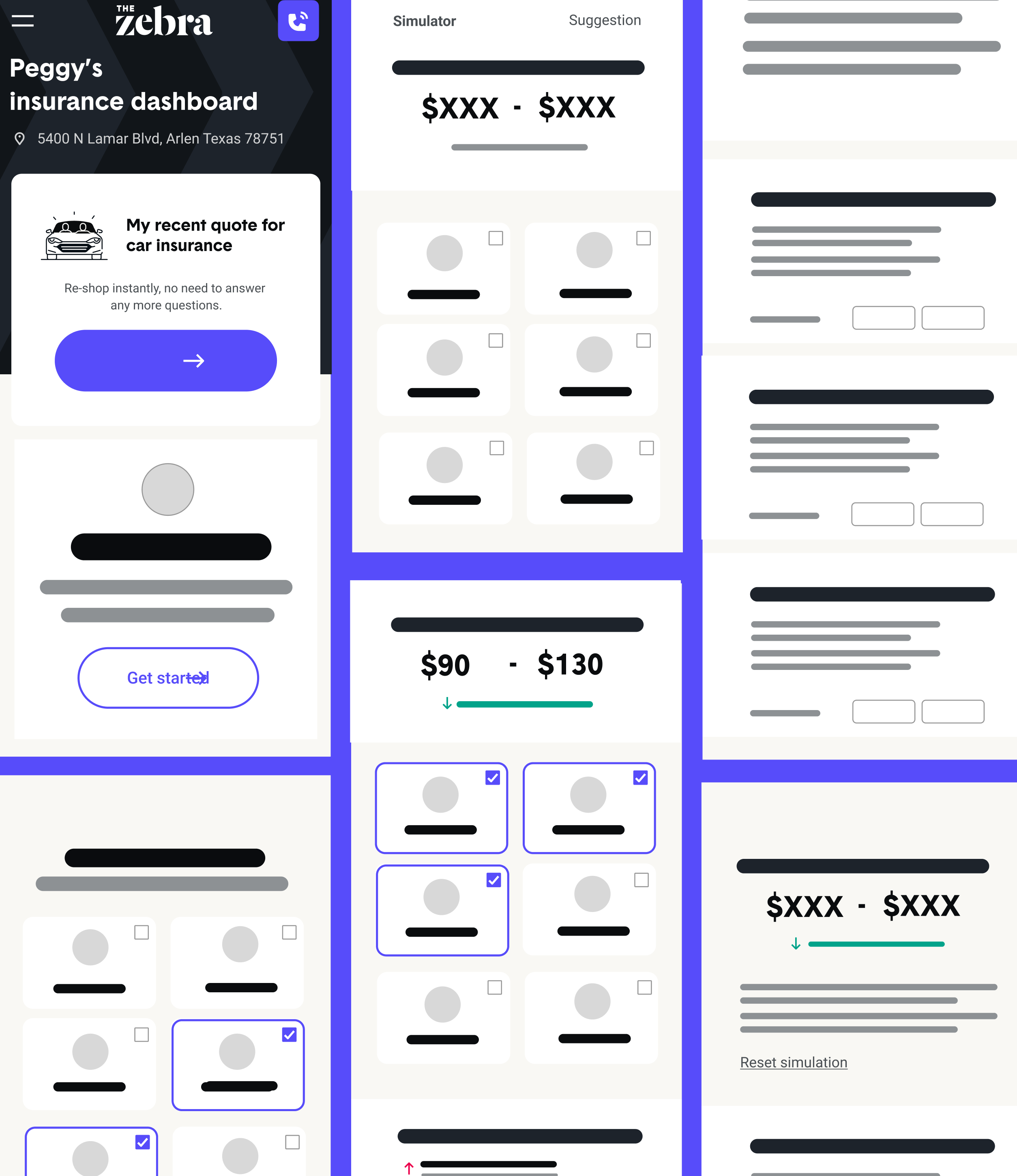
Once our team aligned on the desired flow for the user account, we began brainstorming wireframe concepts. Starting with low-fidelity designs enabled us to gather quick feedback from stakeholders, allowing us to iterate rapidly and ensure early alignment.
DESIGN
Final designs
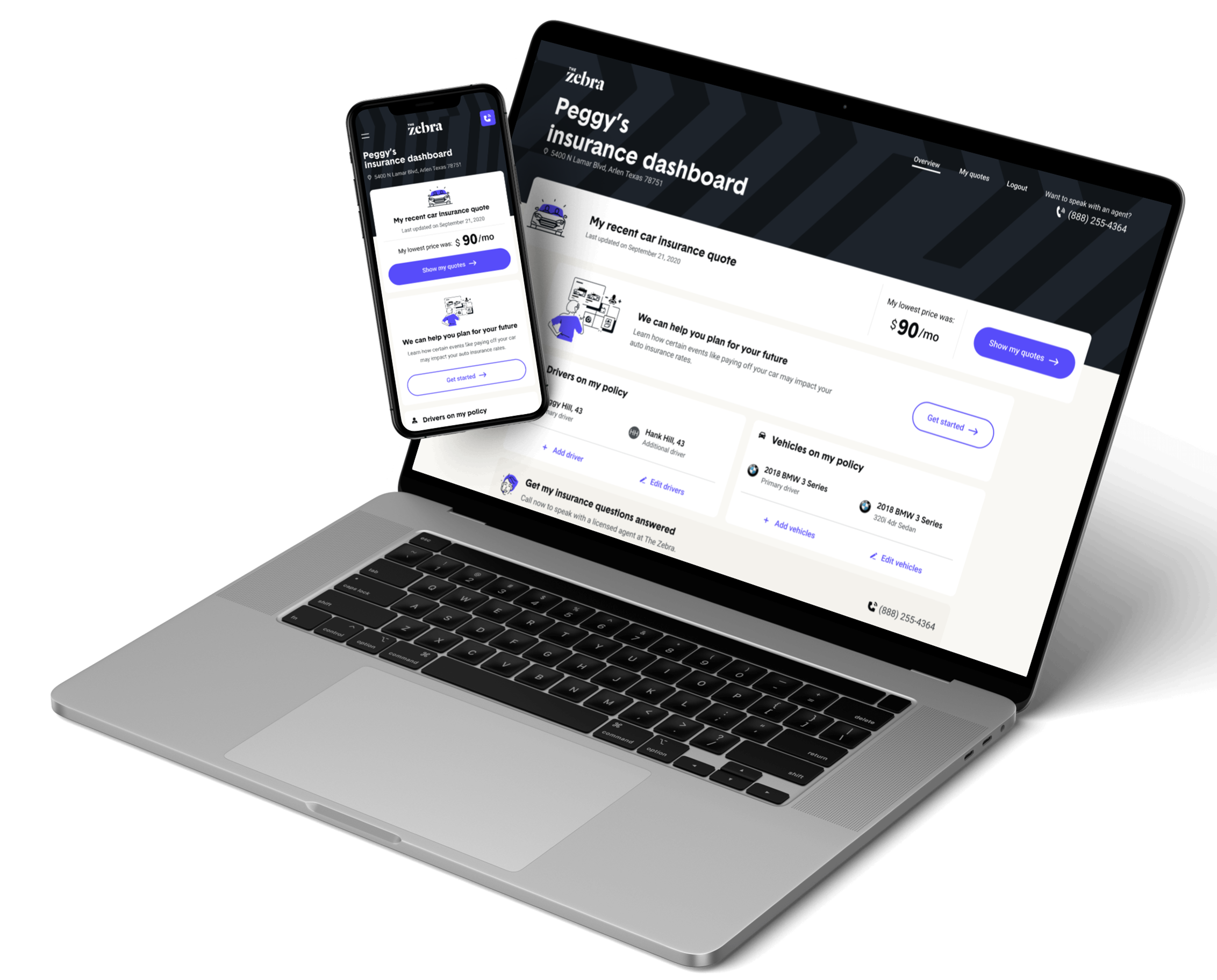
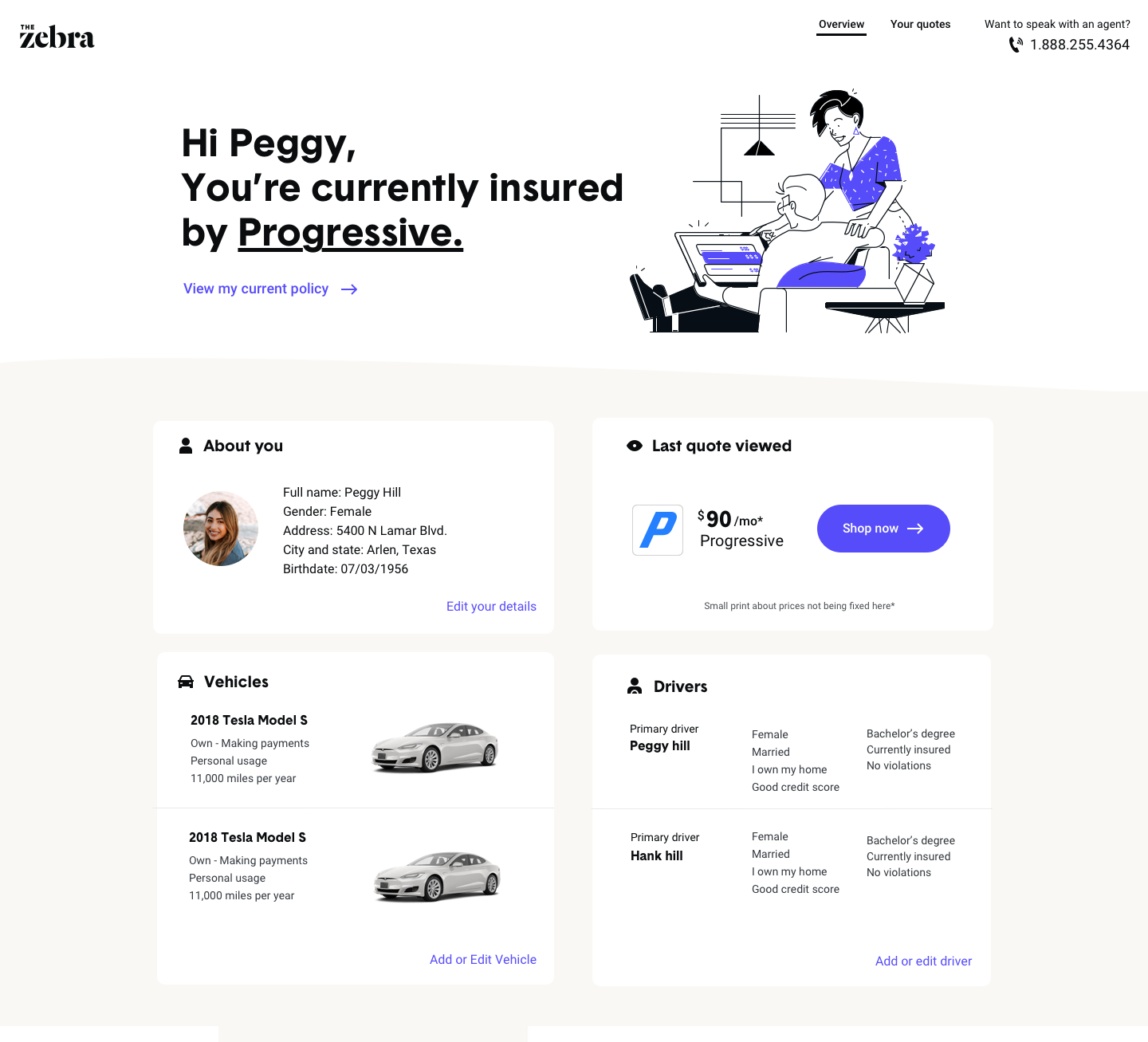
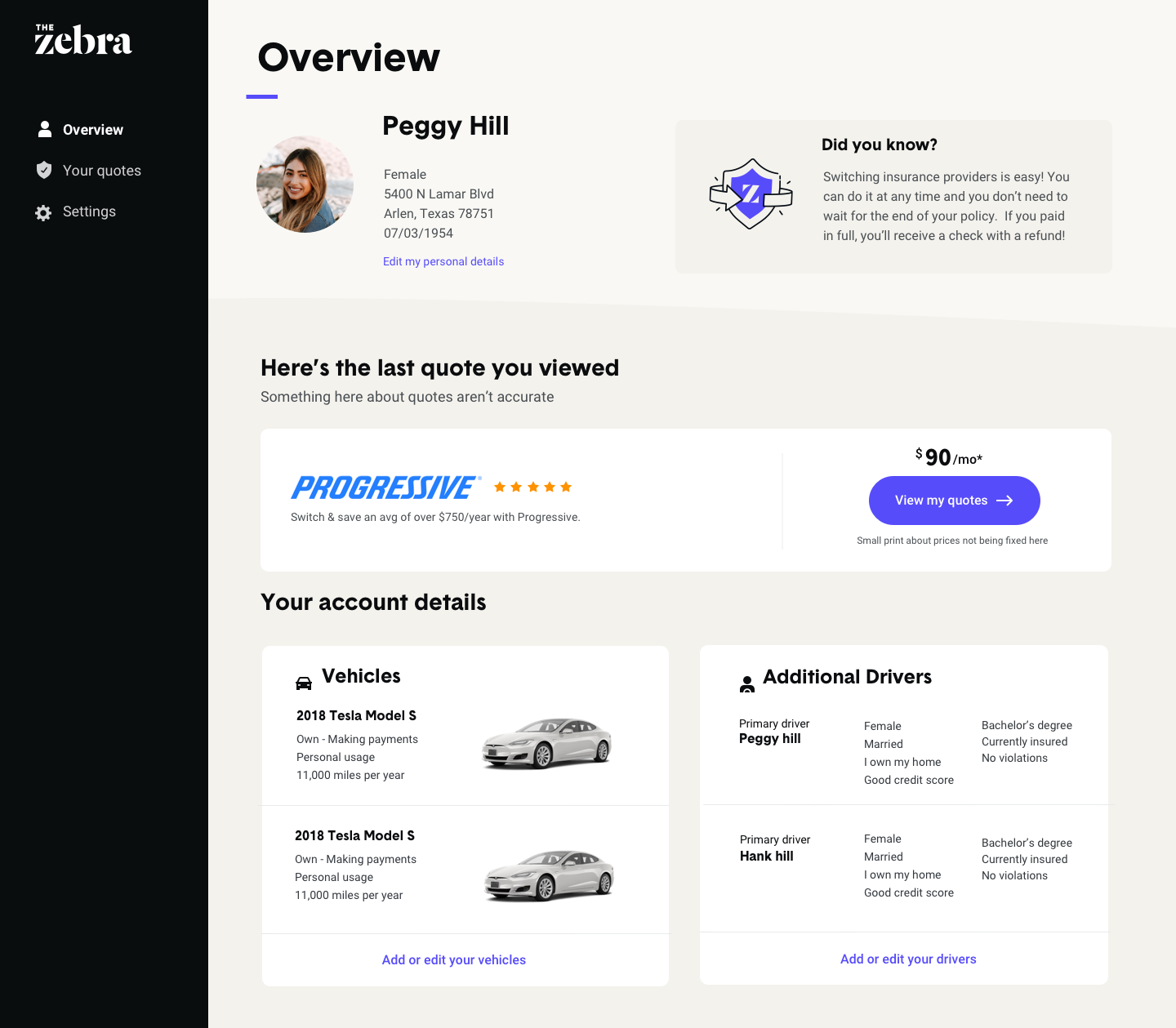
The final design introduced a user account experience where customers could view their current rate, store past quotes, and simulate pricing across different scenarios. Rather than treating insurance comparison as a one-time interaction, the account positioned The Zebra as an ongoing insurance management tool—creating reasons for users to return, deepening engagement, and strengthening The Zebra’s role across the insurance journey.
Users of The Zebra currently lack a clear and consistent way to return to their personalized product experience. Our current solution is both inconsistently presented and difficult to access. We aim to solve this by creating a simple, reliable way for users to easily return to their personalized experience.
RESEARCH
Business Problem
Our data doesn’t yet show a clear picture of long-term user engagement on The Zebra, but there’s strong potential in features that drive frequent, sustained use. Repeat visits lead to higher LTV, increased revenue, and reduced reliance on Marketing for re-engagement.
As we make the product stickier and route more of the insurance journey through The Zebra, we gain market leverage and unlock larger opportunities. To do this, users need compelling reasons to return—like personalized recommendations, helpful tools, and a seamless re-engagement loop.
RESEARCH
Project kickoff & initial research
Collaborating with a large cross-functional team, we began by identifying existing data, user stories, and key research opportunities. Partnering closely with a UX researcher, we conducted a comprehensive competitive analysis to uncover common patterns and best practices in dashboard UX. From there, we developed an aspirational user flow, mapping prioritized solution hypotheses along the way. This artifact became a valuable alignment tool—visualizing our product roadmap and bringing product, design, research, and engineering into strategic sync.
DESIGN
Hi-fidelity concepts
The design phase began with an aspirational user flow, with prioritized solution hypotheses plotted throughout. This deliverable helped visualize our roadmap and aligned product, design, research, and engineering.
RESEARCH
User Flow & Wireframes
Once our team aligned on the desired flow for the user account, we began brainstorming wireframe concepts. Starting with low-fidelity designs enabled us to gather quick feedback from stakeholders, allowing us to iterate rapidly and ensure early alignment.
DESIGN
Final designs
The final design introduced a user account experience where customers could view their current rate, store past quotes, and simulate pricing across different scenarios. Rather than treating insurance comparison as a one-time interaction, the account positioned The Zebra as an ongoing insurance management tool—creating reasons for users to return, deepening engagement, and strengthening The Zebra’s role across the insurance journey.
Users of The Zebra currently lack a clear and consistent way to return to their personalized product experience. Our current solution is both inconsistently presented and difficult to access. We aim to solve this by creating a simple, reliable way for users to easily return to their personalized experience.
RESEARCH
Business Problem
Our data doesn’t yet show a clear picture of long-term user engagement on The Zebra, but there’s strong potential in features that drive frequent, sustained use. Repeat visits lead to higher LTV, increased revenue, and reduced reliance on Marketing for re-engagement.
As we make the product stickier and route more of the insurance journey through The Zebra, we gain market leverage and unlock larger opportunities. To do this, users need compelling reasons to return—like personalized recommendations, helpful tools, and a seamless re-engagement loop.
RESEARCH
Project kickoff & initial research
Collaborating with a large cross-functional team, we began by identifying existing data, user stories, and key research opportunities. Partnering closely with a UX researcher, we conducted a comprehensive competitive analysis to uncover common patterns and best practices in dashboard UX. From there, we developed an aspirational user flow, mapping prioritized solution hypotheses along the way. This artifact became a valuable alignment tool—visualizing our product roadmap and bringing product, design, research, and engineering into strategic sync.
RESEARCH
User Flow & Wireframes
Once our team aligned on the desired flow for the user account, we began brainstorming wireframe concepts. Starting with low-fidelity designs enabled us to gather quick feedback from stakeholders, allowing us to iterate rapidly and ensure early alignment.
DESIGN
Hi-fidelity concepts
The design phase began with an aspirational user flow, with prioritized solution hypotheses plotted throughout. This deliverable helped visualize our roadmap and aligned product, design, research, and engineering.
DESIGN
Final designs
The final design introduced a user account experience where customers could view their current rate, store past quotes, and simulate pricing across different scenarios. Rather than treating insurance comparison as a one-time interaction, the account positioned The Zebra as an ongoing insurance management tool—creating reasons for users to return, deepening engagement, and strengthening The Zebra’s role across the insurance journey.